Andrew Sone has met many interesting people–some good, others very bad–in his years as a parole officer, a Megan’s Law predator unit member, a clinical social worker and finally a therapist. But there’s only one person he calls his hero. 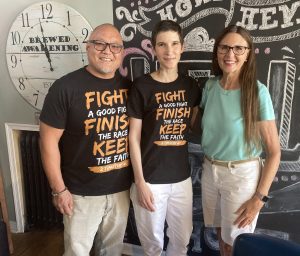
“If anyone asks who’s my hero, I always say ‘my wife’,” explains 54-year-old Andrew, who has been married to Jennifer for 22 years.
To be clear, Jennifer was his hero even before she was diagnosed with cancer last summer, but her cancer journey “has just solidified it.”
Jennifer, 49, doesn’t feel like a hero. She’s physically weak, has trouble concentrating, and still misses her long hair.
Last year, she knew something wasn’t right health- wise, but it took a few months to finally get to the correct medical specialist, who could order the proper tests.
“I was crying when I first saw my scan results (online) and my initial words were: ‘I can’t believe I’m dying’,” Jennifer recalls. “Then a few weeks later when the doctor sat me down and told me it was stage 4, I lost it again.”
Jennifer’s diagnosis of ovarian cancer spread to the lining of the lung, liver and diaphragm “was surreal,” Andrew recalls. “It’s something you never think would happen; cancer applies to someone else.”
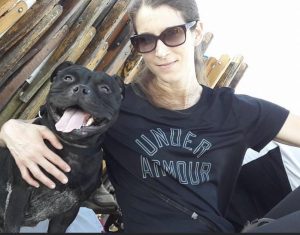
Jennifer (before cancer) & her dog Kapua
In the fall of last year, Jennifer had chemo and surgery to shrink the 10-cm ovarian mass. That was followed by HIPEC, an aggressive surgical technique which bathes the abdominal cavity in a heated, concentrated chemo solution designed to kill residual cancer cells. Then she started “maintenance” chemo and a PARP-inhibitor (targeted therapy that helps cells repair damaged DNA)–a regimen scheduled to be every three weeks for two years.
Follow-up scans and blood work continue to deliver good news: NED (No Evidence of Disease).
Andrew credits his hero-wife’s “passionate love affair with God” for guiding her through these difficult months, including her beloved dog passing away.
“Jen’s walk with the Lord is unwavering.”
“God really sustains me,” Jennifer explains. “I just can’t believe all He’s gotten me through. We are all 100-percent in need of God all the time, but (Andrew and I) were just so helpless after my diagnosis, we really felt how much we needed Him.”
Andrew agrees and says it seemed like “the wind was knocked out of me and my faith was redefined to truly understand ‘dependency’.
“Some of the most powerful prayers I prayed contained just one word: Jesus. That one word said ‘I am completely dependent on You’.”
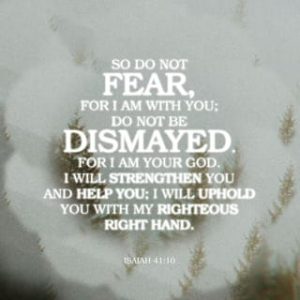
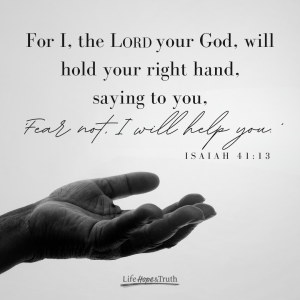
Jennifer acknowledges her share of “crying spells,” but says she always finds strength in Isaiah 41:10:
The couple recently started a “Praying thru Cancer” support group in their hometown of Myrtle Beach in hopes of encouraging others on difficult cancer journeys. They also regularly give away copies of 50 Days of Hope, the book a co-worker gave Jen and which led her to contact me.
Through our correspondence, I discovered that for many years the Sones lived in Pennsylvania and that her parents still live just a few miles from my home. So when the couple came this summer to visit family, we made plans to meet for breakfast.
I’m not sure who was more excited: Jennifer or me!
“I told everyone this is my Make-a-Wish to meet you,” she said with tears in her eyes.
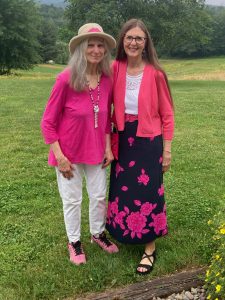
But with tears in my eyes, I knew I had the gift of hugging a real-life hero of the faith.
+++++++++++++++++++++++++++++++++++++++++++++++
Please open in your browser to hear “I Will Fear No More” by The Afters.
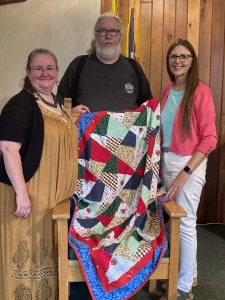
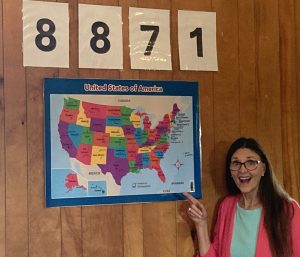 oday there are seven CQ chapters in western New York and one in northern Pennsylvania. At the 20th anniversary celebration last month, the groups announced they had given away a total of 8,871 quilts! (No wonder When GOD & Cancer Meet just had its 20th printing!)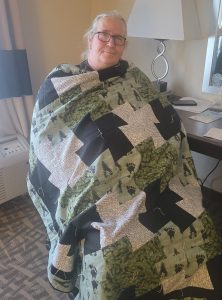
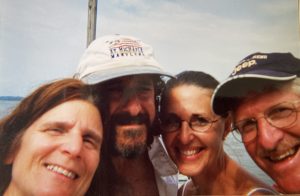
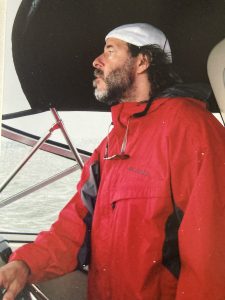 It was nearly impossible for Marc to see out the rain-splattered windshield, and my husband and Elizabeth were trying to read the navigational charts and look for the numbered buoys, which would keep us in the correct channel away from large shipping vessels, shallow water, and crab pots.
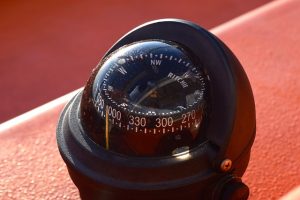 It wouldn’t have surprised me if he’d gone with Elizabeth’s feelings because she was so adamant about them, but his scientific brain won out and Marc turned the boat 180 degrees.
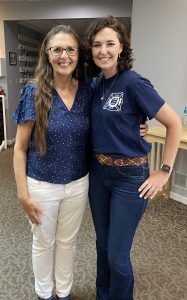 The early days of the pandemic were pretty tough on everybody, especially those–like my friend Erin–dealing with serious health issues.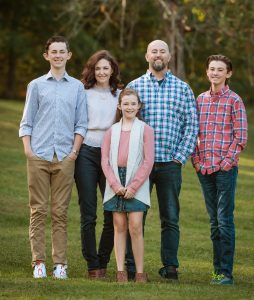
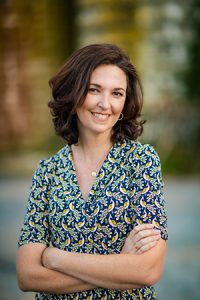 Erin, a businesswoman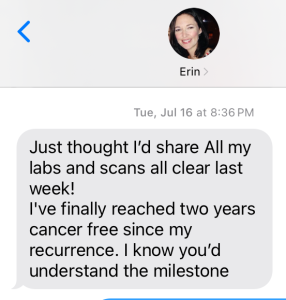

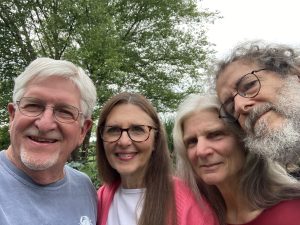
 “I like to be in touch with the Lord all the time, but especially during a trial of any kind, I always feel closer to Him,” she says. “I realize He’s right there with me and it brings a smile and a peace.”
 I’m a newspaper reporter-turned-author. And I’m a passionate encourager, but always a truth-teller. I worked for nearly two decades in a unique position as a patient advocate in my oncologist’s office and the Cancer Prayer Support Group I founded in 1991 is the country’s oldest such faith-based group.