LYNN EIB

Author's posts

A Place to Call Home


Our world could use some good news couldn’t it? In many ways it’s a frightening time in which to be living; wars, rumors of wars, the constant threat of terrorism, the ups and downs of the stock market, violence in the classrooms, so many friends and relatives with cancer, families torn apart by abuse and divorce. Life is not only hard; it’s often downright unfair, as some people seem to have more than their share of troubles. You might even be one of those people.

I once overhead a middle-aged gentleman remark: “Every time I think I have my life together, something happens and it’s falling apart again!”

Wouldn’t it be wonderful if we lived in a world where everything was fair and people didn’t get sick, and sad things didn’t happen, and nobody had to die? Who wouldn’t want to call such a place their “home?”

Did you ever wonder why there’s such a longing in each of us for just such a kind of place? It’s a longing for home, you know. A longing for our real home. You see, we weren’t created to live in California or New York or Florida or anywhere else on the face of this planet. We were created for our real home: Heaven.

The Bible describes heaven in Revelation 21:4 as a place where God “will wipe away every tear from their eyes, and there will be no more death or sorrow or crying or pain.”

And why won’t there be any more tears or death or sorrow or pain? Not because we’ll have all the money we ever wanted or all the fame or all the knowledge or any other tangible item.

It’s because we’ll have God Himself.

In Revelation 21:3, the verse right before the one about no more tears, pain or death, it says: “Look! God’s home is now among his people! He will live with them and they will be his people.”

That’s why there won’t be any more tears or pain or death. We’ll have what we always really needed to be whole—the constant presence of God Himself.

The great 17th-century philosopher and mathematician Blaise Pascal wrote that each of us has a “God-shaped vacuum” in us. There’s a hole, so to speak in our hearts that leaves us longing for something more than this world has to offer. It’s a hole and a longing that God put in us when He created us. He knows only He can fill that hole even though we try to fill it ourselves with all sorts of other things. Some of us try to fill it by buying “stuff” or with relationships or with work or sports or with learning or religious rituals. Some even try things like food or sex or drugs or alcohol. But none of these can fill the God-shaped vacuum in us…instead they only make it bigger.

The only thing that fills that hole and makes us whole is when God fills it with Himself by putting His very Spirit inside us, one life at a time. And when God’s Spirit lives inside us, we discover our purpose for living.

A health crisis often makes us realize how precious life is and can send us scurrying to discover the meaning of life. So, why are we here?

It’s really quite simple. Do you know what it is?

We were created to praise God.

That’s right. We find true joy, true fulfillment when we realize there’s Someone bigger than us. Someone greater than us. Someone worthy of every bit of praise we can give.

We were created to praise God with our lips…and our lives.

And when we do, there’s a feeling of peace and power that comes over us that hardly can be described. It’s a feeling that reminds us this world is not our real home.

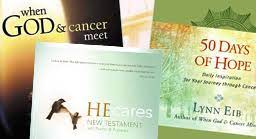
If you’ve never really had praise for God well up in your heart, we pray that you will as you read He Cares today. Revelation gives us just a teeny glimpse of what it’s going to be like in heaven standing before the throne of God with Jesus at His right hand and us telling them how much we love them.

And if you’re still trying to fill that God-shaped vacuum with other things, I pray you’ll allow God’s to fill you with Himself and satisfy that longing for your real home.

That’s NOT Fair!


Remember when you were a kid and indignantly informed your parents: “That’s not fair!”

They probably responded with some important information for you: “Life’s not fair.” Their response only made you madder!

Nobody who’s being treated unfairly wants to hear it. It’s a logical response to a heartfelt emotion. But the longer we live, the more we all realize how true that statement is. Perhaps life has been unfair to you or your loved one recently or perhaps for a very long time. Either way, life has disappointed you. Maybe if you’re really honest you’ll admit you even feel disappointed by God.

I have another truth we’d like to share: don’t confuse life with God.

In Philip Yancey’s book Disappointment with God, he writes about a man named Douglas whom he interviewed because he thought Douglas might feel a great disappointment with God. Life, as Yancey describes it, had been very unfair to Douglas. While his wife was battling advanced breast cancer, Douglas was in a car accident with a drunk driver and suffered a terrible head injury that left him permanently disabled, often in pain and unable to work full-time.

But when Yancey asked this victim of unfairness to describe his disappointment with God, Douglas said he didn’t feel any and instead told Yancey the following:

“I have learned to see beyond the physical reality in this world to the spiritual reality. We tend to think, ‘Life should be fair because God is fair,’ But God is not life. And if I confuse God with the physical reality of life—by expecting constant good health, for example—then I set myself up for crashing disappointment.

“If we develop a relationship with God apart from our life circumstances, “ said Douglas, “then we may be able to hang in there when the physical reality breaks down. We can learn to trust God in spite of the unfairness of life.”

Cancer is very unfair. Even if you “did” something to “get” it or didn’t do something not to get it, it’s still unfair. Maybe you are a smoker diagnosed with some smoking-related cancer. It’s still unfair because many smokers never get develop a disease from their habit (only about 20-percent get lung cancer). Maybe you quit smoking ten or twenty years ago and you still have been afflicted. Hardly fair.

Perhaps you didn’t get regular mammograms, PAP smears or PSAs and now you have cancer. Guess what, it’s still not fair, because lots of people don’t get those screening tests and they don’t get cancer. Besides some people get them faithfully and the cancer isn’t even detected! That seems even more unfair.

Maybe you are overweight or out-of-shape or didn’t get regular physicals and now you have cancer. It’s still not very fair because you know many others in your same circumstances with great health. Or perhaps you received the ultimate insult in being diagnosed with cancer in spite of taking the best care possible of yourself and doing everything right not to get sick.

Go ahead and say it.

It’s not fair that I have this.

It’s not fair that my loved one has this.

It’s not fair that this has happened to us right now.

Say it, but don’t be confused that life should be fair because God is.

Life is not fair, but God is not life.


Yancey says that “Every time a believer struggles with sorrow or loneliness or ill health or pain and chooses to trust and serve God anyhow, a bell rings out across heaven and the angels give a great shout. Why? Because one more pilgrim has shown again that he or she understands that Jesus is worth it all. God is faithful.”

There’s a law firm I once heard advertising on the radio by spotlighting people who have had awful, unfair things happen to them and then hired a lawyer to try and rectify the situation. The commercial concluded, that you, too, should call this law firm “when life hands you moments you just don’t deserve.”

I have some even better advice: When life hands you moments you just don’t deserve, put your trust in the Lord, because even when life is unfair, God is faithful.
Finding the Right Attitude


It’s often said that there are two kinds of people in life: optimists and pessimists. You probably think I’m going to tell you to be an optimist, but I’m not.

I think the best attitude for someone facing cancer is neither total optimism (without a doubt, I’m going to be cured) nor total pessimism (without a doubt I’m going to die), but realism (without a doubt I have a life-threatening illness and I may or may not get better, so I will plan for both).

When we insist we are going to be cured, we set ourselves up for a terrible defeat if it doesn’t happen. On the other hand, if we insist our situation is hopeless, we already are defeated before we start. I believe it’s best to be realistic and make plans to be financially, emotionally and spiritually ready to depart this life. That’s not giving up. It’s coming to grips with our own mortality, so we can really life fully without fear of death.

I believe there’s a difference between total optimism and a positive attitude. Total optimism says: “I’m absolutely, positively going to be cured.” A positive attitude says: “I hope and pray and even expect that I’m going to be cured, but even if I’m not, I will not be defeated.”

A totally optimistic attitude insists lemons will get sweeter. A positive attitude adds some sweetener and makes lemonade out of the lemons.

Author Chuck Swindoll has a wonderful description of the power of a positive attitude: “Words can never adequately convey the incredible impact of our attitude toward life. The longer I live the more convinced I am that life is 10 percent what happens to us and 90 percent how we respond to it. I believe the single most significant decision I can make on a day-to-day basis is my choice of attitude. It is more important that my past, my education, my bankroll, my successes or failures, fame or pain, what other people think of me or say about me, my circumstances, or my position. Attitude keeps me going or cripples my progress. It alone fuels my fire or assaults my hope. When my attitudes are right, there’s no barrier too high, no valley too deep, no dream too extreme, no challenge too great for me.”

I pray your heart finds the right attitude—a positive, realistic attitude.

Entrusting Our Loved Ones to God’s Care


When cancer hits someone in a family, it’s as if the whole family “has” the disease because it disrupts our lifestyle and affects everyone in the home. We wish we could prevent its impact, but it’s not possible.

Those of us who have been diagnosed with cancer may even soberly imagine what life would be like for our families without us.

And when we do, the bottom-line question we must face is: Which do I love more—my relationships on earth or my relationship with God? It’s fairly easy to say we love God most of all, but when push comes to shove (or illness comes our way), will we be longing for our heavenly home or only hanging on to our earthly one? Don’t get me wrong; I don’t think God wants us to turn our backs on our family or our home with some sort of misdirected heavenly gaze.


He wants us to love our family with an unending, unconditional love.

But He still wants us to love Him more.

He wants us to love life with a passion and a purpose.

But He still wants us to love Him more.

He wants us to love this world with care and concern.

But He still wants us to love Him more.


Have you been able to entrust your family to God’s care no matter what happens to you? Here’s a conversation I had many years ago with the Lord.

They love me and I love them so very much.

I love them even more than you do.

I know You love them, but I want to take care of them.

I love them even more than you do.

I know You love them, but they need me.

I love them even more than you do.

I don’t want to entrust them to You, Lord. I want them to be entrusted to me.  I…I…I…

            I love them more than you do.


It’s time to walk by faith and not by sight. God loves your loved ones even more than you do.


That’s Not Fair!


Remember when you were a kid and indignantly informed your parents: “That’s not fair!”

They probably responded with some important information for you: “Life’s not fair.” Their response only made you madder!

Nobody who’s being treated unfairly wants to hear it. It’s a logical response to a heartfelt emotion. But the longer we live, the more we realize how true that statement is. Perhaps life has been unfair to you or your loved one recently or perhaps for a very long time. Either way, life has disappointed you. Maybe if you’re really honest you’ll admit you even feel disappointed by God.

I have another truth I’d like to share: Don’t confuse life with God.

In Philip Yancey’s book Disappointment with God, he writes about a man named Douglas whom he interviewed because he thought Douglas might feel a great disappointment with God. Life, as Yancey describes it, had been very unfair to Douglas. While his wife was battling advanced breast cancer, Douglas was in a car accident with a drunk driver and suffered a terrible head injury that left him permanently disabled, often in pain and unable to work full-time.

But when Yancey asked this victim of unfairness to describe his disappointment with God, Douglas said he didn’t feel any and instead told Yancey the following:

“I have learned to see beyond the physical reality in this world to the spiritual reality. We tend to think, ‘Life should be fair because God is fair,’ But God is not life. And if I confuse God with the physical reality of life—by expecting constant good health, for example—then I set myself up for crashing disappointment.

“If we develop a relationship with God apart from our life circumstances, “ said Douglas, “then we may be able to hang in there when the physical reality breaks down. We can learn to trust God in spite of the unfairness of life.”

Cancer is very unfair. Even if you “did” something to “get” it or didn’t do something not to get it, it’s still unfair. Maybe you are a smoker diagnosed with some smoking-related cancer. It’s still unfair because many smokers never get develop a disease from their habit (only about 20-percent get lung cancer). Maybe you quit smoking 10 or 20 years ago and you still have been afflicted. Hardly fair.

Perhaps you didn’t get regular mammograms, PAP smears or PSAs and now you have cancer. Guess what, it’s still not fair, because lots of people don’t get those screening tests and they don’t get cancer. Besides some people get them faithfully and the cancer isn’t even detected! That seems even more unfair.

Maybe you are overweight or out-of-shape or didn’t get regular physicals. Your diagnosis still is not very fair because you know many others in your same circumstances with great health. Or perhaps you received the ultimate insult in being diagnosed with cancer in spite of taking the best care possible of yourself and doing everything right not to get sick.

Go ahead and say it.

It’s not fair that I have this.

It’s not fair that my loved one has this.

It’s not fair that this has happened to us right now.

Say it, but don’t be confused that life should be fair because God is.

Life is not fair, but God is not life.

Yancey says that “Every time a believer struggles with sorrow or loneliness or ill health or pain and chooses to trust and serve God anyhow, a bell rings out across heaven and the angels give a great shout. Why? Because one more pilgrim has shown again that he or she understands that Jesus is worth it all. God is faithful.”

There’s a law firm that advertises on the radio by spotlighting people who have had awful, unfair things happen to them and then hired a lawyer to try and rectify the situation. The commercial concludes, that you, too, should call this law firm “when life hands you moments you just don’t deserve.”

I  think I  have some even better advice: When life hands you moments you just don’t deserve, put your trust in the Lord, because even when life is unfair, God is faithful.