Category: why?

Absolutely Beating the Odds

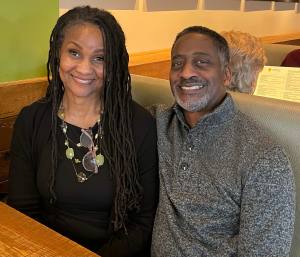
My friend Bill Shrieves, 77,  always has been an overachiever.

A while back he and his wife bought a new in-home care franchise, rapidly growing it into a large, profitable venture. In his younger days, he completed the Marine Corps Marathon three times and just to prove he still could, did it again when he turned 70.

No wonder he decided he could survive a stage 4 pancreatic cancer diagnosis.

“I never really thought I was going to die,” Bill told me after we met last month at my “Morning of Hope” seminar on Maryland’s Eastern Shore.


The medical pronouncement of get-ready-to-die came in January 2011.

Yes, you read that right. As of this writing, Bill is a 13.5-year survivor of pancreatic cancer spread to the liver, making him once again in an elite group as the 5-year survival rate for stage 4 pancreatic is only 1-3%.

Bill’s journey began in November 2010 when an episode of dark urine led him to urgent care where at the age of 64 he was diagnosed with a pancreatic tumor.

The day before Thanksgiving he was at the University of Maryland, Baltimore for surgery called a Whipple procedure which removed the head of the pancreas, the first part of the small intestine, the gallbladder, and the bile duct.  (Only about 20-percent of pancreatic patients are eligible for a Whipple.)

Bill applied to a clinical trial for his post-op treatment, but a CT scan two months after surgery revealed bad news: he no longer was eligible for the trial because the cancer had metastasized to a handful of liver lesions.

“My oncologist told me ‘get your affairs in order because you probably won’t live until the end of the year’.”

Bill started a regimen called FOLFIRINOX, which combines three chemo drugs and a vitamin-B derivative to enhance their efficacy. By mid-March all the lesions except one were gone and in July it, too, disappeared.

After eleven rounds of chemo, Bill’s doctor followed him with scans for several years, but “at the 10-year mark my oncologist fired me!” Bill recalled with a laugh.

However, well before Bill hit that amazing 10-year mark, he was back to achieving again, and in 2013 founded a small nonprofit called Mid-Shore Pancreatic Cancer Foundation midshorepancan.org

“I really wanted to have an impact on pancreatic cancer patients locally,” he explained.

About 15 volunteers offer practical support to maybe a dozen patients each year, and talk or correspond with dozens more around the world who need encouragement. Funds are raised through evening 5K runs at a local golf course.

“We do things like pay bills for them–we even bought a set of false teeth for a lady!,” Bill said.

I asked him why he thinks he has survived when doctors and statistics said he would not.

“I do think optimism is an important thing and I also have a strong faith in God,” said Bill, who along with his wife Jean of 57 years, has two children, three grandchildren, and two great-grands.

“Every day I ask myself why God spared me and what am I supposed to do today,” he added. “I don’t know how someone can face a potentially life-ending illness without faith.”

(For more encouraging pancreatic cancer survivor stories, go to https://pancan.org/stories/)

++++++++++++++++++++++++++++++++++++++++++++++++++
Bill loves gospel music and he and Jean attend a small African-American church where they are the only  white folks. The song “Heaven is Looking Down on Me” is one he enjoys hearing his church’s men’s choir sing. So open in your browser, sit back, and be blessed by The Canton Spirituals’ rendition.

4 Things Not to Say to Suffering People

Two days after my cancer surgery in 1990 at the age of 36, a friend came into my hospital room  with a smile on her face as she announced: “God is going to teach you great things through this trial!”



I wanted to take the IV out of my arm, stab it in hers, and tell her to get in the bed and learn great things from God!

Instead, I smiled weakly and pushed the morphine pump button.

During my more than three decades of cancer support ministry I’ve known literally thousands of suffering people. Here are four things I’ve learned not to say:

1. You should…
However we might be tempted to finish that sentence, we need to stopSuffering people don’t need our advice unless they ask for it.  Suffering is overwhelming and becomes even more so when well-meaning people offer recommendations they believe will help. Most of us are “fixers” and can jump into that role as soon as we hear a need.

Chris Lawrence

Author and longtime stage 4 cancer survivor Chris Lawrence offers this insight: “There is something healing about another person affirming our situation–not just trying to ‘fix it,’ but instead being with us in it.”

Let’s affirm that we hear someone’s hurt. Offer a simple (non-preaching!) prayer. Give assurance of our love–and God’s–no matter what.

2. Something good/better will come from this.
Yes, God can turn mourning into dancing and trade ashes for beauty, but whatever good comes may pale in comparison to the losses and may not even happen in this lifetime.

My friend Marge whose immediate family–husband and two children–were killed by a drunk driver made this observation about suffering: “Grief has given me a perspective on life’s priorities, an appreciation of the significance of the moment, a delight in the distraction of the trivial and a fearlessness of death. But I would gladly give up all these insights to…have my family back.”

It’s not our job to make sense of someone else’s suffering. God may reveal that to them, but as He told Job, He doesn’t owe us an explanation.

3. You shouldn’t feel that way.
Saying this to a suffering person minimizes their pain and is like hitting them when they’re already down.

Remember Job’s friends? Before they started telling him what not to feel, they were great comforters.

When they saw Job from a distance, they scarcely recognized him. Wailing loudly, they tore their robes and threw dust into the air over their heads to show their grief. Then they sat on the ground with him for seven days and nights. No one said a word to Job, for they saw that his suffering was too great for words. Job 2:11-13

Let us, too, sit in silence in those moments when a suffering loved one needs a safe place to vent.

4. Everything happens for a reason.
If this is a favorite phrase and you love to say it to yourself, please, continue! But others may not find the sentiment comforting because the word “reason” by definition means there is an explanation, a justification or rational grounds for what’s occurring. The implication is there’s a hidden “good” reason something happened.

What’s the good reason for suicide? War? Murder? Molestation?

Instead of offering platitudes, let’s offer our presence. NY Times bestselling author Rick Warren shares this personal recollection:

Our small group came over after (our son) Matthew died. They said, ‘We’re spending the night at your house. We’re not going to leave you here alone. We’re going to be with you.’They didn’t try to give us any words of wisdom. They just gave us the ministry of presence. They slept on our couches and on the floor. I’ll never forget how it held us up.”

My friend was right–I have learned great things from God through my cancer journey.

I just wish she hadn’t told me while my suffering was still too great for words.

++++++++++++++++++++++++++++++++++++++
Open in a browser to hear “God of Comfort” by CH Worship.

The Tale of Two Towers

Two “tower” options…which would you prefer?


An 11-day visit to Paris, including the Eiffel Tower, Louvre, Notre Dame, Sainte-Chapelle and all-you-can-eat meals on a week-long riverboat cruise up the Seine.

Or a 12-day stay at Pottstown Hospital-Tower Health, including 10 days without eating or drinking, an NG tube, a PICC line and a bowel resection.

Is your choice made? Yeah, I thought mine was, too. But that was before the worst pain and nausea of my life convinced me to go to the ER late on the night of Aug. 12.

A CT scan showed a small bowel obstruction and I was admitted the next morning.

Did I mention that our suitcases were packed for our nonstop Paris flight leaving that night with traveling companions Bud and Carol Russell?  Oh, and by the way, this was to be an early celebration of our 50th wedding anniversary coming in December!

Doctors and we decided to wait-and-see if the twisted loops would untangle themselves. We enlisted family and friends to pray and I changed our departing flight from Sunday to Wednesday night, in hopes we could still make the cruise which began Thursday afternoon.

Meanwhile, a thin, flexible plastic nasogastric tube was inserted in my nose, down my throat and esophagus, and into my stomach to suction out its contents.  A few ice chips became the only item on my daily menu.

By Tuesday afternoon it seemed obvious that the bowel was not going to untwist itself in time and I canceled our Paris flight, notified the cruise ship and the travel insurance companies. On Friday, I was in the operating room having a bowel resection–eerily reminiscent of 33 years ago when I had a colon resection, but thankfully, this time without a cancer diagnosis.

I stayed in the hospital another week post-surgery, while my seven grandkids all prayed for Grandma to pass gas (marching and shouting “Fart! Fart!”). 

I’ve been home a little over two weeks now and am trying to build up my stamina, find food that tastes good, gain weight, and get my digestive system settled into another new normal.

Homecoming day–exhausted, but had to wash my hair!

I debated about whether to even write about this ordeal, but I’ve tried to be so honest and transparent in my books and blogs that it just didn’t feel right not letting people know.  Still, I worried about sharing my story when so many of you have tons of stress in your life already. And  besides, I know that missing out on an amazing trip is nothing compared to so many other losses.  I also thought perhaps I should wait to write until I had some profound piece of wisdom or spiritual gem learned from all this, but nothing materialized.

(Of course, I’m thankful that God didn’t allow this to happen on the 7-hour flight or after we arrived in a foreign country. But if I’m honest, I wish He would have delayed it until after we got back home!)


Last week a question posed in a Rick Warren devotion got me thinking: “What about the problems you’re going through right now–they’re a test of your faithfulness. Will you continue to serve God even when life stinks?”

So here’s my “wisdom”: life STINKS, but I will serve God no matter what.

I make this choice because I agree with Babbie Mason “When you don’t understand. When you can’t see His plan. When you can’t trace His hand, trust His heart.”

+++++++++++++++++++++++++++++++++++++++++++++
Open in your browser to hear Babbie Mason sing this beautiful song “Trust His Heart.”


“Poop Happens!”

When our oldest daughter was six months old, we took her on a two-week car trip out West with my parents and she was a model passenger…well, almost.

I had just finished nursing Danielle while riding in the backseat (back before that was deemed unsafe!) and was holding her in my lap when she let loose with more than her disposable diaper could contain. (Did I mention I was wearing white slacks because we were going to eat at the Officers’ Club when we reached our destination?)

My dad pulled on to a sideroad so I could change Danielle’s diaper, her outfit and wipe off my no-longer-white slacks. And that’s when he noticed the sign: Sore Finger Road.

It seemed like such a funny name out in the middle of the desert that we all just started laughing. From them on, every blowout was judged by whether or not it was “Sore Finger Road” worthy.

Poop happens.

At predictable times, at inconvenient times, sometimes too many times, occasionally not enough times…but it happens.

As a 33-year colorectal cancer survivor, I’m probably a little more obsessed with this topic than most people. But I got the idea to blog about it when I heard songwriter-musician Tim Timmons https://www.timtimmonsmusic.com give a talk on “Poop Happens” at the Bob Goff retreat where we both spoke last month.

Tim explained (and I, of course, verified at https://www.epa.gov/sites/default/files/2015-08/documents/beneficial_uses_of_manure_final_aug2015_1.pdf ) that manure is actually extremely beneficial.

It  loosens (softens) compacted soil.

When soil absorbs manure, helpful nutrients are released, contributing to overall soil health.

It produces oxygen which helps soil breathe.

Runoff is reduced by adding manure, which as Tim explained “holds together the good stuff and lets the bad stuff go.”

It improves crop yield.

No wonder that driving by farmland in the spring assaults our noses with odoriferous country air!

But poop doesn’t just happen literally. It happens figuratively too, doesn’t it?

Something occurs in our life–or the life of someone we care about–and it really stinks! As NY Times bestselling author Rick Warren puts it, “Life is a series of problems: Either you are in one now, you’re just coming out of one, or you’re getting ready to go into another one.”

So true!  And if you’re like me, your first response is to want the “stink” gone…and fast!

But since hearing Tim’s message, I’ve been trying to view the “manure” getting dumped on me as a way God can soften my heart, increase my spiritual growth, and help me let go of the bad stuff while hanging on to the really important, good stuff.

We can rejoice, too, when we run into problems and trials, for we know that they help us develop endurance.
And endurance develops strength of character, and character strengthens our confident hope of salvation.
Romans 5:3-4

Dear brothers and sisters, when troubles come your way, consider it an opportunity for great joy.
For you know that when your faith is tested, your endurance has a chance to grow.
–James 1:2-3

Tim Timmons

“I lived most of my life trying to stop manure,” Tim says. “I was trying to keep my comfort…but now I ask ‘What’s it revealing about the condition of my heart?'”

In my next blog, I’ll share Tim’s amazing 22-year journey with chronic cancer, but in the meantime, poop is going to happen to you and me. Let’s allow it soften our hearts to the goodness of the Lord and in Him find our joy.

++++++++++++++++++++++++++++++++++++++++++++++++++++++++++++
Be sure to open in your browser to hear “This is the Day,” a very short, upbeat, encouraging song by Tim Timmons © 2021 Integrity Music . (It’s a perfect song to sing any day when poop happens!)

SIX THINGS ALWAYS TO SAY TO GRIEVERS

The holidays often are especially difficult for those who have lost a loved one.  How do we convey sympathy without saying something irritating or even downright painful? Have you ever felt helpless knowing what to say when someone has experienced a deep loss?

Here are my thoughts on SIX THINGS ALWAYS TO SAY TO GRIEVERS.

  1. I’m so sorry.
    It may not feel as if you’re saying much, but honestly, there are no words you can utter to take away grief. We comfort much better when we give up trying to say something to “fix” the sad situation–it can’t be done. Let your hug, your handshake, your tears convey that you are sharing in your friend’s sorrow. The best comforters simply feel another’s pain; they don’t try to explain it.
  2. Would it be helpful if I ________________________________?
    Fill in the blank with something practical: Brought a meal? Picked up your kids for a play date? Mowed your lawn? Helped you sort through paperwork? Took you out for coffee? Or whatever creative suggestion you think of–and then pick a date to do it. Concrete offers with a definite timetable are much more valuable than “Let me know if you need anything.” Grievers feel overwhelmed and don’t want to call people to ask them for a favor.
    If you know your friend’s “love language” (http://5lovelanguages.com), you can choose a sympathy expression accordingly. When my physical-touch-friend’s father died, I gave her a gift certificate for a therapeutic massage. My gifts-friend got a big bouquet of wildflowers (after the funeral bouquets had died.) When my Dad passed away in 2011, my friend Karen knew my primary love language is quality time, so she planned a “Pamper Lynn Day’ with manicures, browsing antique shops, eating Thai food and talking about parents. It was such an emotionally refreshing day, we created “Pamper Lynn AND Karen Day” and recently celebrated our 12th annual!
  3. A great memory I have of him/her is _______________________.
    Image courtesy Sandy Millar at Unsplash

    Photo by Sandy Millar on Unsplash

    Mourners want to talk about their loved one and hear others speak of ways that person touched their life. I often wait a few weeks to send a sympathy card so I have plenty of time to write a meaningful note of memories. (And also because grievers are inundated with “sympathy” immediately after the death. Then everyone’s life goes back to normal, but the griever’s never will.) Don’t be afraid to say the deceased person’s name.Yes, it may bring tears to their eyes, but their fear a loved one will be forgotten is even sadder.

  4. Is there an especially difficult time of the day/week when I could pray for you?
    When I asked members of my Grief Prayer Support Group this question concerning the hardest time of day, their responses varied. Many said they dreaded too-quiet evenings without their spouse. Some hated mornings with no child to wake up for school. Still others trudged through Sunday afternoons because that was then they always visited their parent. Discover your grieving friend’s difficult time and promise to pray for them at that time—you could even text to let them know you’re praying, or send a short prayer to them.
  5. If you would like to attend a grief support group, I’ll go with you.
    It’s hard to walk into a roomful of grievers, but so much easier with a friend by your side. Many churches hold 13-week Grief Share programs (www.griefshare.org). Stephen Ministries, funeral homes and hospice organizations often offer bereavement support. I’ve compiled a list of grief care organizations and resources in the back of my book When God & Grief Meet http ://lynneib.com/index.php/my-books/#anchor5.
  6. I care…and I’m here.
    Your presence speaks much louder than your words. If at all possible, be present physically. Otherwise, “show up” in phone calls, texts, cards or whatever means you have for connecting. You can be the kind of friend Aaron and Hur were for Moses in Exodus 17.  Moses held high the staff of God for Joshua and the Israelite army because whenever he lowered it, the enemy prevailed. But “Moses’ arms became so tired, he could no longer hold them up. So Aaron and Hur found a stone for him to sit on. Then they stood on each side of Moses, holding up his hands.”

Grieving is exhausting work. Ask God to help you find a sitting “stone” for your mourning friend and then show you how to hold up his/her weary arms.

For the LORD comforts his people and will have compassion on his afflicted onesIsaiah 49:3

LifeHopeandTruth.com

+++++++++++++++++++++++++++++++++++++++++++++
I hope you are blessed by the music video “Cry Out to Jesus” by Third Day.