Category: grief

Living with Loss: My Oncologist Has Cancer (Part 2)


Cancer has a nasty habit of taking things away from people–things like hair and strength and jobs and time. Sometimes it takes them away for a short while and sometimes it takes them away permanently.

Even before my oncologist Dr. Marc Hirsh got an official cancer diagnosis, the disease already was robbing him of things that had been precious to him.

His first loss came without any warning: his health. At 69, Marc was still very active: biking, running, paddle boarding, downhill skiing and even kick boxing a heavy bag. He went to bed Friday, May 22 feeling fine after his daily workout, but awakened in the night with chest pain. Tests at the ER revealed a 12-cm tumor pressing on his heart and partially collapsing a lung. He left the hospital feeling weak, short of breath and with a prescription for narcotic painkillers.

And the loss of his health led immediately to his second loss: his profession.

“I realized right away what would be involved with this tumor–even in the best case scenario–and I knew I couldn’t keep up what I had been doing,” Marc explained in our recent phone interview. “The rigors of private, solo practice without back-up, on call 24/7–I wouldn’t be able to do the job I wanted to. I knew it was the end.”

Patients were quickly informed that they needed to find a new oncologist. The staff of ten–some of whom have worked for Marc for 20 or 30 years–was already in mourning and now patients and their families began grieving the loss of their oncologist’s care. (Photos are Fall 2019 patient party when staff costumed as Where’s Waldo? –the one and only year Marc ever dressed up.) 

On June 8 Marc updated his website to include this message: “I am sorry that I cannot continue as your physician.  I extend to you my prayers for your future health and happiness.  It has been my honor and privilege to be involved with your care.”

“I knew I would stop working someday, but not like this,” Marc told me. “When I finally went into the office and saw everything all boxed up, I just broke down.”

“That loss of my profession was even worse than the cancer,” he added. “I’m no longer that doctor, that oncologist. It kind of hurt.”

But the final loss was his beloved dog, Jake. Rescued some 10 years ago, the lab-hound was practically inseparable from Marc.  Jake even came to the office every day, where he won the hearts of all the dog-loving patients as he visited them in the exam rooms, happily accepting handfuls of doggie treats.

Fourteen-year-old Jake was slowing down and in the last few weeks became very sick. On July 24, the difficult decision was made to end his suffering.

“No, not Jake!” Marc recalled. “I got cancer, I lost my job and now I have to put down my dog? I was a little angry. I can’t even have my therapy dog with me.”

But Marc never thought “it’s not fair.”

“If you’re a follower of Christ, you’re still going to experience struggles, problems,” he explained. “Faith doesn’t prevent (bad) things from happening.

“I don’t blame God (for all the losses) or wonder why,” he added. “I’m 69 and I’m very grateful for all the things I’ve had. My life has been so blessed and very successful that I couldn’t complain.”

He’s even grateful to have started his radiation therapy and oral chemo yesterday after waiting three weeks for all the preliminaries to conclude.

Here’s the scripture prayer Marc posted on his website for all his patients and their families:
The LORD bless you, and keep you;
The LORD make His face shine upon you, and be gracious to you;
The LORD lift up His countenance on you, and give you peace.
Numbers 6:24-26

NEXT WEEK AUG. 19 Faith & Family: My Oncologist Has Cancer (Part 3)
Please go to my website home page to sign up for my bi-weekly blog.

+++++++++++++++++++++++++++++++
Make sure to open in your browser to hear “If I Stand,” one of Marc’s favorite songs by Rich Mullins, who Marc describes as “our No. 1 favorite songwriter–he’s like the Bob Dylan of Christian music.”


IF ONLY…

If only I hadn’t missed that one little step on the deck, fallen and broken my wrist fourteen months ago.  If only that tumble didn’t cause a nerve injury, greatly impeding my recovery and still needing prescription pain relief. If only all the trauma  didn’t bring on tachycardia, requiring a complete cardiac workup and lifestyle changes. If only a screw didn’t come loose a year later, necessitating removal of the hardware. If only being intubated for the surgery didn’t cause painful TMJ.  If only I didn’t have to start all over again with occupational therapy.

All these health struggles caused by one little missed step.

How about you? Any “if onlys” in your life or your loved one’s?

If only this diagnosis had not come right now. If only that distracted driver hadn’t rear ended us. If only my partner hadn’t been unfaithful. If only I didn’t lose my job. If only my loved one was still here with me. If only…you fill in the blanks.


In the Gospel of John we read about sisters Mary and Martha who sent a message to Jesus concerning their brother Lazarus: “Lord, your dear friend is very sick.” Jesus got the message and then promptly stayed put for two more days. By the time he arrived at Lazarus’ home, his friend had been in the grave four days.

Martha ran outside the village to meet Jesus and told him: “Lord, if only you had been here, my brother would not have died.” (John 11:21, italics mine)

Shortly, Mary arrived with the same heartbroken words: “Lord, if only you had been here, my brother would not have died.” (John 11:32, italics mine)

Jesus followed the two women to Lazarus’ grave and scripture tells us He was both angry and weeping. He knew His Heavenly Father was going to raise His friend back to life in a few moments, but that didn’t prevent Jesus from being mad and from crying.

Friends, I believe Jesus cares deeply about our “if onlys.” I believe He is angry when our frail bodies break down with sickness and injury. He’s angry when other people’s missteps cause us pain and suffering. He’s angry when partners are unfaithful. He’s angry when unfairness happens to us. He’s angry when death temporarily steals a loved one from us.

If you are wondering what Jesus thinks about your “if onlys”…He’s weeping with you.

He’s shedding tears because we have to experience trials in this life and He longs for us all to be in Heaven where the Book of Revelation tells us “there will be no more death or sorrow or crying or pain. All these things are gone forever.”

Right before Jesus prayed for Lazarus’ resurrection, He told all the weeping mourners: “Didn’t I tell you that you would see the glory of God if you believe?” (He didn’t add the word “only” but His message is the same.)

I can’t tell you exactly how God is going to respond to your painful “if only,” but I know He loves you and if only you believe–trust in Him–you will see His glory some how, some way, some time. He may bring physical healing or emotional soothing or relationship restoration or supernatural comfort.  As the song below reminds us: “When your pain runs deep, His love runs deeper still.”

Open in your browser to hear the music video “Somewhere in Your Silent Night” by Casting Crowns

How is your tent holding up?

I distinctly remember the last time my family and I went tent camping…and why we never did again after that experience.

It was the summer of 1983 and my pastor-husband convinced me that it would be fun for our daughters and me to join him on the youth group camping trip. So I packed up everything required for the overnight stay at a nearby state park and we borrowed two small tents.

Did I mention that our girls were 5, 3 and 15 months?

Fortunately,  we got everyone to sleep–Ralph in one tent with our 3-year-old and me in the other with the baby and our oldest.  But it wasn’t long before I heard my husband calling out to me from his nearby tent: “Stay really still–there’s a mother skunk and four babies heading toward your tent.”

I cautiously turned toward the tent wall and sure enough, there was a mommy skunk silhouette and four smaller shadows toddling behind. I held my breath as the critters walked so close their sides pressed against the canvas. Luckily, the skunk family kept moving without leaving behind any of their special brand of perfume and I literally could exhale.

I thought the night’s excitement was over until a couple hours later a thunderstorm erupted and my husband’s tent starting leaking –waking up Bethany.  My tent fared better, but the three of us had to scoot in really tight so as not to touch the soggy canvas walls.

We survived the rest of the night undisturbed by weather or wildlife, but I vowed never to take three little kids tent camping again and I happily have kept that promise.


So how is your tent holding up? You know, that earthly dwelling we call our body.

“Unless you are in peak form and full of vigor, you have already experienced frustration with this earthly tent. If you haven’t yet, you will. It grows old and weary eventually, and then it dies,” writes author Chris Tiegreen.

I know many of you reading this are experiencing frustration with your earthly tent or your loved one’s.  Maybe the storm already has hit and you’re wondering whether your tent is going to hold up. And perhaps you even can feel some “skunks” pressing up against as you dread the stench of more bad news.

 And for some of you, the worst already has happened to someone you loved.  Less than 24 hours ago, I got the news that another dear friend had taken her last earthly breath, just four years after receiving a cancer diagnosis.

I don’t know how any of us can face the storms and stink of this life  without God’s great and precious promise: “For we know that if the earthly tent which is our house is torn down, we have a building from God, a house not made with hands, eternal in the heavens.” 2 Corinthians 5:1

These tents are definitely temporary dwellings and that’s why they rip, get dumped on and wear out.  They are not our permanent residences.

“When hope in this life proves futile, when bodies ache and souls cry out, we can count on the glorious promise of resurrection,” Tiegreen adds. “There is an eternal house fitted just for us.”

I’m sure it will be the best Home ever and I doubt there will be any skunks!

Be sure to view this email in your browser to hear the music video below by Matt Redman, “One Day (When We All Get to Heaven.”

Do We Always See God Work Everything for Good?

So if God works all things together for good, does that mean in our lifetime we will see that promise come true?  Maybe…maybe not.

I consider myself extremely fortunate that God has allowed me to see firsthand how He has used my cancer diagnosis for good by giving me a worldwide ministry to cancer patients and their caregivers. However, I’m very aware that many others still are waiting to see that promise of Romans 8:28 come true.Our view from inside an earthly trial is limited and distorted. We often cannot see how what is happening could ever possibly be used as part of God’s good plan. And we must realize we may not actually get to see the “good” because it’s not coming until the distant future.  We have to ACCEPT that we don’t have the big picture.

“Now we see things imperfectly, like puzzling reflections in a mirror, but then we will see everything with perfect clarity. All that I know now is partial and incomplete, but then I will know everything completely…” 1 Corinthians 13:12

But accepting that we don’t have the whole picture is not very comforting unless we also BELIEVE that a loving God does.

Some years ago our youngest daughter, Lindsey, who had just graduated from college (and as the daughter most like me, butted heads with me the most as a teenager), wrote me a Mother’s Day note that said in part: “I didn’t always agree or understand when you said ‘no’ to me, but I never doubted that you loved me.”

That’s what it means to trust. We choose never to doubt that God loves us even if we don’t always agree or understand when He answers “no” to our prayers.

However, just knowing these two truths—accepting we don’t have the whole picture and believing a loving God does—is still not enough. We have to CONTINUE to walk by faith and not by sight. Even if we’re not from Missouri, we humans tend to be “show me” people. We want to see first and then believe. I am an extremely skeptical person (which makes me a great newspaper reporter, but an annoying wife), and I always want the facts, the explanation, and the logic before I’ll agree with just about anything.

But the Word of God, my compass in life and especially in the storms, tells me that as believers we are different than others in this world because “we live by faith, not by sight.”[1] Or as another translation puts it, “That is why we live by believing and not by seeing.[2]

I must constantly remind myself that I don’t need to see it all because God sees it all from the beginning of history to the end of time. As one writer explains: “Because we see only this sliver of time, we tend to view all of time through the same narrow and ill-fitting glasses. We forget that God is not bound by time. He exists outside of its minutes and millennia.”[3]

He and only He has the big picture. We move ahead not knowing for sure how–or when–it all will work out, but believing He does and will guide our way.

I don’t know how to say it any other way than we simply walk by faith.  And if we don’t have the privilege of seeing in this lifetime how it all works for good, we can be encouraged that we are not alone. Read the list of faithful heroes in Hebrews 11 and don’t miss verse 13: “All these people died still believing what God had promised them. They did not receive what was promised, but they saw it all from a distance and welcomed it.” 

Remember the ABCs of trials: Accept you don’t have the whole picture; Believe a loving God does; and Continue on by faith and not by sight.

Adapted from 50 Days of Hope, copyright 2012  by Lynn Eib
[1] 2 Corinthians 5:7, NIV
[2] 2 Corinthians 5:7 NLT
[3] Taken from a devotional published by the Outreach of Hope “God Keeps his Promises,” 2001.

Music video “Walk by Faith” by Jeremy Camp also available at https://www.youtube.com/watch?v=ygyOECYwd-4

SIX THINGS ALWAYS TO SAY TO GRIEVERS


Have you ever felt helpless knowing what to say when someone has experienced a deep loss? How do we convey sympathy without saying something irritating or even downright painful? (See last’s week’s blog “Six Things Never to Say to Grievers.”)

Here are my thoughts on SIX THINGS ALWAYS TO SAY TO GRIEVERS.

KONICA MINOLTA DIGITAL CAMERA

  1. I’m so sorry.
    It may not feel as if you’re saying much, but honestly, there are no words you can utter to take away grief. We comfort much better when we give up trying to say something to “fix” the sad situation–it can’t be done. Let your hug, your handshake, your tears and your kiss on the cheek convey that you are sharing in your friend’s sorrow. The best comforters simply feel another’s pain; they don’t try to explain it.
  2. Would it be helpful if I ____________?
    Fill in the blank with something practical: Brought a meal? Picked up your kids for a play date? Mowed your lawn? Got you some groceries? Helped you sort through paperwork? Took you out for coffee? Or whatever creative suggestion you can think of. And then pick a date to do it. Concrete offers with a definite timetable are much more valuable than “Let me know if you need anything.” Grievers feel overwhelmed and don’t want to call people to ask them for a favor.
    If you know your friend’s “love language” (http://5lovelanguages.com), you can choose a sympathy gift accordingly. When my physical-touch-friend’s father died, I gave her a gift certificate for a therapeutic massage. My gifts-friend got a big bouquet of wildflowers (after the funeral bouquets had died.) When my Dad passed away in 2011, my friend Karen knew my primary love language is quality time, so she invited me to “Pamper Lynn Day.” We spent the day getting manicures, browsing antique shops, eating Thai food and talking about parents. It was such an emotionally refreshing day, we created “Pamper Lynn and Karen Day” and this year celebrated our seventh annual event!
  1. A great memory I have of him/her is _____________.

Mourners want to talk about their loved one and hear others speak of ways he/she touched their life. I often wait a few weeks to send a sympathy card so I have plenty of time to write a meaningful note of memories. (And also because grievers are inundated with “sympathy” immediately after the death. Then everyone’s life goes back to normal, but the griever’s never will.) Don’t be afraid to say the deceased person’s name. Yes, it may bring tears to their eyes, but their fear a loved one will be forgotten is even sadder.


  1. Is there an especially difficult time of the day/week when I should pray for you?
    When I asked members of my Grief Prayer Support Group this question concerning the hardest time of day, their responses varied. Many said they dreaded too-quiet evenings without their spouse. Some hated mornings with no child to wake up for school. Still others trudged through Sunday afternoons because that was then they always visited their parent. One man in my group feared Friday afternoons at three because that’s when his wife passed away. Discover your grieving friend’s difficult time and promise to pray for them then—you could even text/message a timely reminder that you are praying or send a short prayer to them.
  1. If you want to attend a grief support group, I’ll help you find one and go with you.
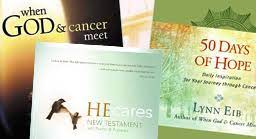
    It’s hard to walk into a roomful of grievers, but so much easier with a friend by your side. Many churches hold 13-week Grief Share programs (www.griefshare.org). Stephen Ministries, funeral homes and hospice often offer grief care meetings. There is even support especially for those who have lost a child. I’ve compiled a list of grief care organizations and resources in the back of my book When God & Grief Meet http ://lynneib.com/index.php/my-books/#anchor5(If you live near Hanover, PA and have lost a loved one to cancer, you can attend a grief prayer support group through Dr. Marc Hirsh’s office.)
  1. I care…and I’m here.
    Your presence speaks much louder than your words. If at all possible, be present physically. If that is not possible, “show up” in phone calls, texts, cards, notes or whatever means you have for connecting. You can be the kind of friends Aaron and Hur were for Moses in Exodus 17.  Moses had to hold high the staff of God for Joshua and the Israelite army because whenever he lowered it, the enemy prevailed. But “Moses’ arms became so tired he could no longer hold them up. So Aaron and Hur found a stone for him to sit on. Then they stood on each side of Moses, holding up his hands.”

Grieving is exhausting work. Ask God to help you find a sitting “stone” for your mourning friend and then show you how to hold up his/her weary arms.

For the LORD comforts his people and will have compassion on his afflicted ones. Isaiah 49:3

If the music video doesn’t automatically open, view in your browser or use this link https://www.youtube.com/watch?v=qEz2PsLJ-RI