Category: families

Family Additions: My oncologist has cancer (Part 11)

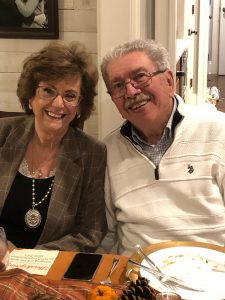
Not only is my oncologist Dr. Marc Hirsh alive and well 3.5 years after pretty much everyone expected him to die, but his family is growing.

On the same day this month that he got the good news from Hershey Medical that the 2.5-inch tumor behind his heart is still stable, he officially gained another granddaughter! Daughter Sarah adopted  a precious 3-year-old girl, whom the single mom has fostered since she was about 18 months old.
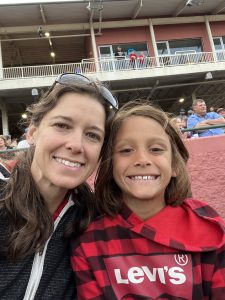
“The official adoption proceedings were great,” Marc told me on the phone a few days ago. “Social services had a big party afterwards for everyone and then Sarah had a party on the weekend with a huge blow-up water slide. It was great!”

The newest Hirsh joins big brother Levi, 9, and  another foster child whom Sarah has had since she was just a few months old.

The other new Hirsh family member is even younger…but much bigger.

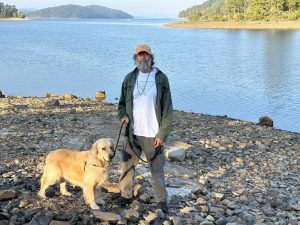
Meet Boondock, a loving golden retriever who weighed about 80 pounds at 16 months when he came to Marc and Elizabeth.

Ouachita Lake State Park, Arkansas

Even though they’re both bonafide dog lovers, neither had planned on getting another dog after Marc’s beloved Jake had to be put down in 2020. But when the sweet, golden pup needed a home, it was clear to them that they should welcome “Boonie” into their house…and their 19-foot RV.

“He’s a very good traveler,” Marc said. “He really enjoys the RV although he’s too big to turn around in it and has to back up.”

Boondock is “very comfortable in small spaces” and “scrunches up” into the crawl space below the Hirshes’ bed when they lower it for sleeping, Marc said.

The three of them have plans to go out West and visit daughter Jessi and family in Oregon, with plenty of scenic stops along the way.

“I pick out all the routes and areas I want to see and make all the camping reservations,” Marc explained. “I’m the navigator and Elizabeth does all the driving.”

I asked Marc, 72, how it feels to be surviving a rare, incurable cancer for this long.

“I get anxious a couple of weeks before I go in (for a 6-month recheck) because I still have symptoms,” he acknowledged. “I get winded more easily now and you never know whether it’s old age or something else. I definitely have ‘scanxiety’ and it’s good to get a normal report.”

But he refuses to cower in cancer’s shadow, fretting about the future.

“I’m just kind of at this place where I’m really happy to be alive and have a (sound) mind and be with people I love,” he explained.

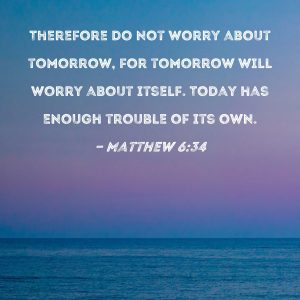
Biblehub.com

“Living in the moment really gives me peace,” he added. “I don’t worry about tomorrow. I want to be grateful and concentrate on living for today. I’m not worrying about cancer.”

P.S. Marc is moving his semi-annual checkups to summer and winter so the family can more easily take long road trips in the fall and spring.  Next check-up and blog update: June 2024.

++++++++++++++++++++++++++++++++++++++++++
Open in your browser to enjoy  “You’re Always Here (Psalm 23)” by Rich Mullins, Marc and Elizabeth’s favorite Christian artist. (I wish it was better audio, but the words are still powerful.)


The Goodness of God and the “Badness” of Life

The other morning as I listened to CeCe Winans belt out the song “The Goodness of God,” I suddenly had flashbacks of “bad” things I’ve experienced in my nearly seven decades of living.

A Mother’s Day miscarriage.

A life-threatening cancer diagnosis.

Untimely deaths of dear friends.

Painful turmoil in churches.

Addiction crises ending in suicides.

Heartbreaking marriage problems in friends and families.

Heartfelt prayers without the hoped-for answer.

I began to feel an overwhelming sadness and asked myself: How can I sing the words “all my life You have been faithful; all my life You have been so, so good” when I know I have seen a lot of so, so bad?

How about you? Have you ever asked the question “God, if you’re so good, why has this happened?” Or ” Lord, why hasn’t this happened?”

I sure have.

Why now, Lord?

Why them, Father?

Why, again, God?

Why didn’t You do what I know You have the power to do?

I don’t think the Creator of the Universe is dismayed at all by our honest questions. Just read through the Psalms and you will hear the writers pleading with God.

Some want Him to hurry up…

Lord, hear my prayer! Listen to my plea!
Don’t turn away from me in my time of distress.
Bend down to listen, and answer me quickly when I call to you. Psalm 102:1-2

Some feel incredibly discouraged…

Save me, O God, for the floodwaters are up to my neck.
 Deeper and deeper I sink into the mire; I can’t find a foothold.
I am in deep water, and the floods overwhelm me.
 I am exhausted from crying for help; my throat is parched.
My eyes are swollen with weeping, waiting for my God to help me. Psalm 69:1-3

During that recent morning of listening to “the goodness of God,” while visualizing the “badness” of life, the explanation came to me.

All of life is not good, but all of God is.

“The Lord, the Lord God, merciful and gracious, long-suffering, and abounding in goodness and truth “is how God described Himself to Moses.

Yes, God is good…all the time. He is good in the good times and He is good in the bad times. He doesn’t prove His goodness by making life easy or fair or happy. We can trust that His goodness is simply His character and cannot be changed.

As author Chris Tiegreen explains it: “Real faith recognizes God’s nature against all visible circumstances and says ‘I know who You are, I know You’re good, even if I can’t see Your goodness right now’.”

And as Psalm 23 promises “Surely goodness and mercy shall follow me all the days of my life; and I will dwell in the house of the Lord forever.”

Won’t you join CeCe Winans today and sing about “The Goodness of God”?

++++++++++++++++++++++++++++++++++++++++++++++++
(Be sure to open this blog in your browser to hear the music video.)

Shock, Despair, Peace and Hope

Carolyn and Mark, Vermont vacation a few weeks before diagnosis

Last year when my friend Carolyn took ornaments off the Christmas tree, she wondered what changes would come to her family before she unpacked them again.

Never could she have imagined what 2022 would bring.

But neither could she have foreseen what God was going to supply for one of the most difficult years of her 59-year-old life.

First, in May of last year, a freak boating accident claimed the life of her brother-in-law, a respected radiologist.

Then in July after returning from a wonderful Vermont family vacation, two weeks of random stomach pain led her to consult a doctor, who thought she had a gallstone. But a scan showed something much more ominous: advanced pancreatic cancer related to an inherited gene mutation.

“Shock, tears and wrestling to understand, ” Carolyn recalls. “My daily life–and our family’s–as we knew it was over.”

This diagnosis was her “worst nightmare” as her mother died from ovarian cancer when Carolyn was only 9.

Carolyn’s genetic BRCA mutation, (which was found through testing I did with her many years ago at my oncologist’s office) is associated primarily with increased risk of breast or ovarian cancer. She had taken great pains to lower those risks, but now found herself among the 1-to 3-percent of carriers  who develop pancreatic cancer, for which no reliable early detection exists.

Multiple complications and severe chemo toxicity early on in treatment landed Carolyn in the hospital for extended stays three times in only two months.

“One night as I lay awake in the hospital, my left leg twice the size of my right and throbbing from a blood clot, I was trying to pray… pleading with God,” Carolyn recalls.” Was He even there? Had He abandoned me?

“Then these words came into my mind: ‘Are you willing to suffer for My glory?'” Carolyn says. “I knew immediately this was the Lord speaking.”

She didn’t have to think long before whispering: “Yes, Lord, of course.”

The words “for My glory” lingered in Carolyn’s mind because as a longtime journalist (we actually met in 1988 while covering a civil trial in a Harrisburg courtroom), she always has said “my mission with my writing is to use it for God’s glory.”

“Could it be that the best story I would write to showcase God’s glory would be my own?”

Much has changed since the first oncologist didn’t seem to think treatment could help. Seven months later, Carolyn’s tumor marker has decreased by more than 90-percent, the liver lesions have shrunk, and her current oncologist gives her something crucial: Hope. This month she starts a clinical trial with that Philadelphia oncologist who specializes in BRCA-related pancreatic cancer.

“I have come a long way since last fall when I told Mark to put me on hospice,” she says. “I had lost all hope in the midst of intense physical suffering…but God broke through and I was able to feel Him and talk to Him again. I was filled with a wondrous peace that sustains me still.”

Becky, Olivia, Amy & Carolyn

Carolyn doesn’t know what her future holds, but she’s looking forward to May when oldest daughter Olivia gets married and middle daughter Becky graduates from law school.

“It’s pretty hard for a planner like me not to let my mind wander too far down the road,” she acknowledges. “But there is great relief and peace in being utterly at God’s mercy, one day at a time.

“Every day I approach the throne of grace with boldness, asking God to save my earthly life.”

She also ponders one of her favorite Oswald Chambers’ quotes:

“Are you in the dark just now in your circumstances, or in your life with God?
Then remain quiet…When you are in the dark, listen and
 God will give you a very precious message for someone else when you get into the light.”

I’m trusting that Carolyn’s words will be a “precious message” for someone today.

++++++++++++++++++++++++++++++++++++++++++++++
As soon as I heard the song “Desert Road” by Casting Crowns, I thought of my dear friend Carolyn.

Do You Have Home-Field Advantage?

Granddaughter Abby, 8, with her sign: “Go Hurts! You’re our #1 guy!”

THE PHILADELPHIA EAGLES ARE GOING TO THE SUPER BOWL!!!

And if you’re wondering what that announcement has to do with words to the weary, I must tell you that I started writing this blog in my mind as I lay awake in the middle of the night after the Eagles’ win. So it must be divine inspiration, right? (Keep reading to decide for yourself if that’s true!)

I was a big sports fan even before I graduated from THE Ohio State University. It’s fascinating how schools, especially ones the size of Ohio State and Penn State, have far better winning records at home. Their 100,000+-seat football stadiums filled with cheering crowds give them something called “home-field advantage.” Studies show home teams on average win 55%-70% of the time (and this phenomenon is not limited to football or colleges).

Several years ago the Boston Red Sox started the season 22-5 at home, with pitcher Roy Oswalt posting a 10-0 record at Fenway Park. When our middle daughter played basketball at Houghton (N.Y.) College, her team was 32-0 at home.

Which brings me back to “my” Eagles, who, as the top team in their division, competed at home for all their playoff games.

Sunday Tweet from former Eagle Chris Long

Eagles Head Coach Nick Sirianni predicted the advantage like this: “Our crowd inspires us. Our crowd makes it difficult for the opposing team with how much communication that has to happen…It’s going to be loud. We’ll feed off that…”

Sunday’s Philly crowd of almost 70,000 roared at 95 decibels most of the Eagles’ 31-7 win. (Not to brag, but our family’s “crowd” of 7 adults and 7 children hit 91 decibels during our off-key rendition of “Fly, Eagles Fly!”)

Sports psychologists don’t know for sure why the home team tends to win, but surmise that the presence of people who feel for us and with us helps bring out the best in us. Their cheers convey: “We care. We think you’re great. We’re proud of you.” And athletes respond by giving their best.

It’s the same way when we’re going through life’s trials, (which can bring out the worst in us). Having friends and family “cheer” us on can bring out the best in us: home-field advantage! 

It doesn’t matter how tough, strong, independent we are—the Bible says we shouldn’t try to go it alone.

“Two people are better off than one, for they can help each other succeed.
If one person falls, the other can reach out and help. But someone who falls alone is in real trouble…
A person standing alone can be attacked and defeated, but two can stand back-to-back and conquer.
Three are even better, for a triple-braided cord is not easily broken.”-
-Ecclesiastes 4:9-12

Bethany’s first (and last!) marathon in 2018 with Bauer, 7, running the last mile while cheering her on

We need to be willing to allow others to come along side and help us even though we probably would rather be on the giving end than the receiving. It’s humbling to let a friend scrub your toilets, mow your yard, or drive you to a doctor’s appointment, but when we turn down acts of kindness, we’re robbing others the joy of giving!

I hope as you face sickness or other life struggles, that you’re welcoming friends and family as your “cheering” crowd. Otherwise, it’s like choosing to play all your games away—no home-field advantage!

And if you’re blessed not to be facing any trials right now, please ask God to show you someone whose load you could lighten by cheering them on–maybe you’ll even hit 95 decibels!
+++++++++++++++++++++++++++++
I hope you’re encouraged by this Michael W. Smith song “I Will Carry You.”

SIX THINGS ALWAYS TO SAY TO GRIEVERS

The holidays often are especially difficult for those who have lost a loved one.  How do we convey sympathy without saying something irritating or even downright painful? Have you ever felt helpless knowing what to say when someone has experienced a deep loss?

Here are my thoughts on SIX THINGS ALWAYS TO SAY TO GRIEVERS.

  1. I’m so sorry.
    It may not feel as if you’re saying much, but honestly, there are no words you can utter to take away grief. We comfort much better when we give up trying to say something to “fix” the sad situation–it can’t be done. Let your hug, your handshake, your tears convey that you are sharing in your friend’s sorrow. The best comforters simply feel another’s pain; they don’t try to explain it.
  2. Would it be helpful if I ________________________________?
    Fill in the blank with something practical: Brought a meal? Picked up your kids for a play date? Mowed your lawn? Helped you sort through paperwork? Took you out for coffee? Or whatever creative suggestion you think of–and then pick a date to do it. Concrete offers with a definite timetable are much more valuable than “Let me know if you need anything.” Grievers feel overwhelmed and don’t want to call people to ask them for a favor.
    If you know your friend’s “love language” (http://5lovelanguages.com), you can choose a sympathy expression accordingly. When my physical-touch-friend’s father died, I gave her a gift certificate for a therapeutic massage. My gifts-friend got a big bouquet of wildflowers (after the funeral bouquets had died.) When my Dad passed away in 2011, my friend Karen knew my primary love language is quality time, so she planned a “Pamper Lynn Day’ with manicures, browsing antique shops, eating Thai food and talking about parents. It was such an emotionally refreshing day, we created “Pamper Lynn AND Karen Day” and recently celebrated our 12th annual!
  3. A great memory I have of him/her is _______________________.
    Image courtesy Sandy Millar at Unsplash

    Photo by Sandy Millar on Unsplash

    Mourners want to talk about their loved one and hear others speak of ways that person touched their life. I often wait a few weeks to send a sympathy card so I have plenty of time to write a meaningful note of memories. (And also because grievers are inundated with “sympathy” immediately after the death. Then everyone’s life goes back to normal, but the griever’s never will.) Don’t be afraid to say the deceased person’s name.Yes, it may bring tears to their eyes, but their fear a loved one will be forgotten is even sadder.

  4. Is there an especially difficult time of the day/week when I could pray for you?
    When I asked members of my Grief Prayer Support Group this question concerning the hardest time of day, their responses varied. Many said they dreaded too-quiet evenings without their spouse. Some hated mornings with no child to wake up for school. Still others trudged through Sunday afternoons because that was then they always visited their parent. Discover your grieving friend’s difficult time and promise to pray for them at that time—you could even text to let them know you’re praying, or send a short prayer to them.
  5. If you would like to attend a grief support group, I’ll go with you.
    It’s hard to walk into a roomful of grievers, but so much easier with a friend by your side. Many churches hold 13-week Grief Share programs (www.griefshare.org). Stephen Ministries, funeral homes and hospice organizations often offer bereavement support. I’ve compiled a list of grief care organizations and resources in the back of my book When God & Grief Meet http ://lynneib.com/index.php/my-books/#anchor5.
  6. I care…and I’m here.
    Your presence speaks much louder than your words. If at all possible, be present physically. Otherwise, “show up” in phone calls, texts, cards or whatever means you have for connecting. You can be the kind of friend Aaron and Hur were for Moses in Exodus 17.  Moses held high the staff of God for Joshua and the Israelite army because whenever he lowered it, the enemy prevailed. But “Moses’ arms became so tired, he could no longer hold them up. So Aaron and Hur found a stone for him to sit on. Then they stood on each side of Moses, holding up his hands.”

Grieving is exhausting work. Ask God to help you find a sitting “stone” for your mourning friend and then show you how to hold up his/her weary arms.

For the LORD comforts his people and will have compassion on his afflicted onesIsaiah 49:3

LifeHopeandTruth.com

+++++++++++++++++++++++++++++++++++++++++++++
I hope you are blessed by the music video “Cry Out to Jesus” by Third Day.